Sahan

Pathfinders in Policy & Practice

The term Sahan is derived from the Somali language, denoting the nomadic scouts or pathfinders tasked with charting the optimal route for their communities toward peace, prosperity, and resources. Much like these skilled navigators, who possess a deep understanding of both the terrain and society, Sahan aims to deliver informed insights and strategic counsel essential for making well-founded policy decisions.
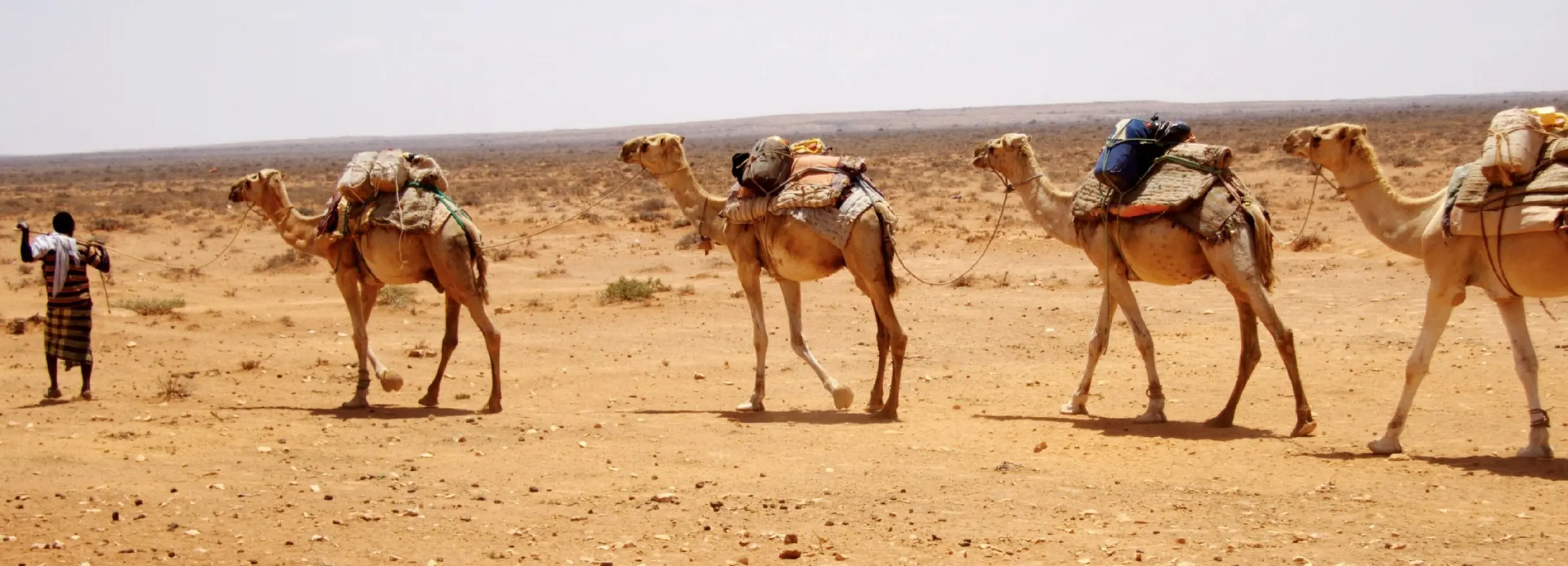
Sahan Global Banner

What we do

Sahan conducts continuous monitoring and analysis of security dynamics, threats, and responses across the Horn of Africa, leads scenario-building exercises, and provides professional education for new and experienced partners working in the region. Our services of focus are the following

Security

With over a decade of experience, Sahan provides expert security analysis, risk management, and policy advisory across the Horn of Africa—backed by unique access to key networks and real-time insights into regional threats.

Geopolitics

Sahan provides strategic geopolitical research and analysis on the Horn of Africa, examining external influence, political transitions, and regional security to support informed, evidence-based policymaking.

Trainings

Sahan offers expert-led professional development seminars—both public and customized—equipping policymakers, diplomats, and analysts with practical tools and insights to address political, security, and geopolitical challenges in the Horn of Africa.

Our Daily Publications

Our Daily Publications deliver timely, expert analysis and curated regional news on Somalia, Ethiopia, and the wider Horn of Africa.
Each issue features original commentary from Sahan’s analysts and a multilingual digest of top political, security, and humanitarian developments.
The Somali Wire

Since October 2020, the Somali Wire has led the way in reporting accurate and timely news from Somalia and beyond. Offering coverage of politics, security, economics and more, this bulletin remains one of the most widely cited and respected sources on Somalia.

The Ethiopian Cable

Launched in August 2021, the Ethiopian Cable delves into Ethiopia’s complex political and socio-economic landscape. Published every Tuesday, each edition features key stories translated from Amharic and Tigrinya, providing context-rich coverage of current events.

The Horn Edition

The Horn Edition, launched in September 2023, casts a spotlight on developments across the wider Horn of Africa. Created in response to the conflict in Sudan, it provides a region-wide perspective through curated and summarised stories from Djibouti, Eritrea, Ethiopia, Kenya, South Sudan, and Sudan.

From our bulletins

Recent Issues.

Stay informed with our most recent daily publications and expert commentary.

1,000+ editions published

Issue No. 895 New
The Somali Wire

At the end of November, the residents of Mogadishu will be able to supposedly participate in their first direct elections since the late 1960s. Though having repeatedly postponed the polls, the handpicked Independent National Electoral and Boundaries Commission (INEBC) has set the date of the district council elections for 30 November, asserting that close to a million people have registered in the capital for the grand event. And yet, as ever, with the Hawiye-dominated politics of Mogadishu still so frayed and the polls considered a flimsy attempt to foreground a term extension for President Hassan Sheikh Mohamud, the exercise in direct democracy is hardly laudable.

Issue No. 308 New
The Ethiopian Cable

With northern Ethiopia and Eritrea teetering on the brink of a return to full-scale conflict, the grim morass that has become Tigrayan politics shows no sign of easing. Recent days have again been dominated by accusations and counter-accusations by the Tigray People's Liberation Front (TPLF) in Mekelle and the deposed Tigray Interim Administration (TIA) leader Getachew Reda from Addis over violent clashes in Southern Tigray

Issue No. 894 New
The Somali Wire

Relations between Mogadishu and Hargeisa continue to plumb fresh depths. Already grimly strained by the formalisation of Villa Somalia's proxy as North Eastern State (NES) in Laas Aanood, the continuing dispute over airspace and e-visa requirements has ratcheted up again in recent days. With both pronounced expressions of Somaliland's de facto sovereignty, these issues have repeatedly been the site of Mogadishu's political vandalism across successive administrations.

Issue No. 893
The Somali Wire

On 3 October, the World Food Programme (WFP) announced a drastic 68 percent cut to emergency food assistance in Somalia — reducing coverage from 1.1 million beneficiaries to 350,000, making essential food aid available to fewer than one in ten Somalis. The decision, driven by a USD 98.3 million funding gap through March 2026, comes at a moment when Somalia’s food security crisis is accelerating at an alarming speed. Between July and December 2025, the number of people facing emergency-level hunger (IPC Phase 4) rose by 50 percent, from 624,000 to 921,000, while projections indicate that 4.4 million Somalis will face acute food insecurity by the end of the year. As the lean season approaches (November to March), WFP warns it requires at least USD 98 million to sustain reduced rations for 800,000 people until March 2026.

Issue 105
The Horn Edition

Despite rumours of declining health, Djibouti’s President Ismaïl Omar Guelleh’s (IOG) is maneuvering to extend his grip on power amid growing tensions over succession. The 77 year-old leader, who took power in 1999 as his uncle’s hand-picked successor, has pushed through constitutional changes that allow him to run again in 2026, with the age limit having been scrapped on 2 November – moves that have further ignited both public discontent and simmering rivalries between Djibouti’s Afar and Issa communities. Guelleh, has maintained a relatively low public profile in the past year. In late September 2024, social media reports claimed he had been hospitalised and flown to Paris due to critical illness, with some even suggesting internet outages in Djibouti aimed at suppressing news of his condition. His Finance Minister, Ilyas Moussa Dawaleh, flatly disputed reports that Guelleh was critically ill, confirming only that the president had an issue with his right knee. But these denials, along with his refusal to establish a clear succession plan, have only intensified speculation about Djibouti’s political future. As IOG clings to power, the prospect of a succession crisis looms large, threatening instability in the nation.

Issue No. 892
The Somali Wire

Armed conflict exacts a heavy and often invisible toll on both combatant and civilian minds as well as on bodies. Those affected by humanitarian emergencies often experience psychological distress, with the World Health Organisation (WHO) reporting that an estimated one in five individuals develop mental health conditions such as depression, anxiety, or post-traumatic stress disorder.

Scroll